
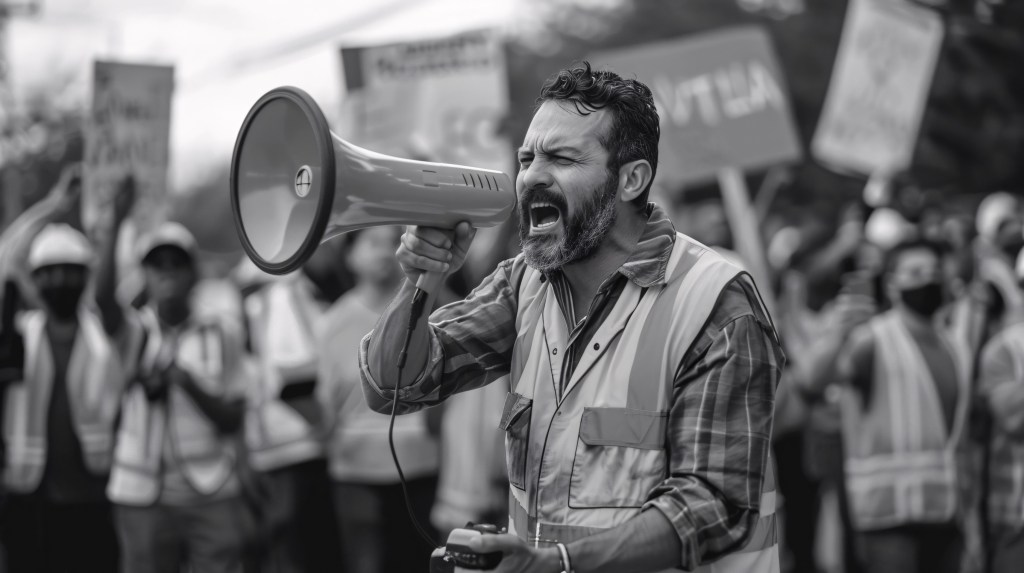
Political polarisation is more than just an abstract concept or the product of ideological conflict. It is a powerful force reshaping national agendas and health priorities, with far-reaching consequences for global health. The divide between left and right, progressive and conservative, is deeply entrenched in numerous regions across the world, and its effects on public health are already evident in countries like the United States, the United Kingdom, Brazil, and beyond. These divisions have the potential to reshape the trajectory of population health, making it more difficult to tackle urgent health crises, and threatening to reverse decades of progress in the fight for equity in healthcare.
In the United States, the impact of political polarisation on health policy is perhaps the clearest. Health care has become a partisan battleground, with the Affordable Care Act (ACA) emblematic of this clash. For nearly a decade, Republicans have sought to dismantle or severely limit the ACA, despite its significant role in expanding healthcare coverage. Under President Donald Trump, the U.S. pulled out of the World Health Organization (WHO) in 2025, a move that raised alarms among public health experts. The withdrawal not only threatens the flow of funding to global health programs but also weakens the U.S.’s ability to respond to global pandemics. This political decision leaves millions in the U.S. vulnerable, highlighting the stark contrast in responses driven by political ideologies. The global impact is clear: countries with fragile health systems, particularly in Africa, struggled to access life-saving resources as the U.S.’s withdrawal undermined international coordination.
Across the Atlantic, the United Kingdom has seen political polarisation reshape its approach to health policy, with Brexit being a significant catalyst. The departure from the European Union left the UK in a state of uncertainty, particularly concerning the movement of healthcare professionals and the funding that was previously allocated through EU partnerships. Political rhetoric surrounding Brexit contributed to a divisive atmosphere, even as the country faced the unprecedented challenge of managing the COVID-19 pandemic. This has had a direct impact on population health, particularly in underfunded areas of the NHS, where resource shortages were exacerbated. Public health messages, often muddled by political discourse, undermined the country’s ability to foster trust in government guidelines. The challenge now is to rebuild a unified health strategy that transcends political divisions, but with increasing fragmentation, this seems a distant goal.
In Europe, the political polarisation seen in Hungary and Poland is influencing public health priorities in ways that could have lasting effects on the continent. In Hungary, Prime Minister Viktor Orbán’s government has pushed back against EU health regulations and funding, and his handling of the COVID-19 crisis was marked by resistance to EU-supported measures. In Poland, the government’s reluctance to promote the benefits of vaccinations, alongside a robust anti-LGBTQ+ agenda, has strained public health efforts, making the population less receptive to scientifically backed policies. These policies could have long-term repercussions, as trust in the state’s ability to manage health crises erodes, leading to poor health outcomes, particularly for vulnerable minorities and those without sufficient access to health education.
Meanwhile, in South America, Brazil’s political landscape under President Jair Bolsonaro’s administration highlighted the dangerous intersection of health and politics. Bolsonaro’s dismissal of COVID-19 as “just a little flu” and his rejection of vaccines left the country deeply vulnerable to one of the worst outbreaks in the world. The rise of populist leaders with anti-science rhetoric is not exclusive to Brazil; similar attitudes have been seen in other parts of the continent, contributing to a slow, fragmented response to the pandemic. This has led to an unnecessary loss of life, disrupted vaccination efforts, and ongoing challenges in healthcare infrastructure, which will affect population health in the region for years to come.
In Asia, political polarisation in countries like India has complicated the response to the COVID-19 pandemic and other health crises. The Indian government’s nationalist approach to health policy often clashes with regional and state-level governments, who struggle to implement central health directives. The lack of coordination has been most stark during the pandemic, where the federal government’s messaging was frequently inconsistent with the needs of the most affected regions. This political divide not only led to confusion and delayed responses, but it also put millions at risk, particularly in rural and economically disadvantaged communities.
Africa is no stranger to the intersection of politics and health. Countries like South Africa, where President Cyril Ramaphosa’s government has had to balance competing political interests, have seen healthcare policies shaped by partisan politics. In Zimbabwe, political leadership has undermined healthcare delivery, with corruption and poor governance leading to a collapse of the health system. While African countries have shown remarkable resilience, the political instability in some areas makes it difficult to address the root causes of poor health, such as malnutrition and infectious diseases, which have direct consequences for population health and global health initiatives, especially as international aid becomes politicised.
This political divide is not limited to any one region; it is a global issue that, while deeply rooted in local contexts, has consequences that extend beyond borders. The World Health Organization’s ability to marshal resources for health crises relies on the cooperation of its member states, yet the rise of nationalist politics has created fissures that disrupt global health efforts. In a world where a pandemic in one part of the world can quickly become a global crisis, political infighting can derail collective action. This fragmentation could make it even more difficult to tackle global health challenges such as climate change, antimicrobial resistance, and non-communicable diseases.
There is an urgent need to recognise that health is not a partisan issue; it is a universal need. In order to address the growing divide, governments must shift away from divisive political rhetoric and focus on building policies that are based on evidence, compassion, and the long-term well-being of their populations. This includes reducing the influence of politics on public health systems, investing in international cooperation, and prioritising the needs of the most vulnerable, regardless of political affiliation. Only then can we hope to move towards a more unified and sustainable global health strategy — one that transcends political divides and focuses on the health of humanity, not political agendas.



Leave a comment