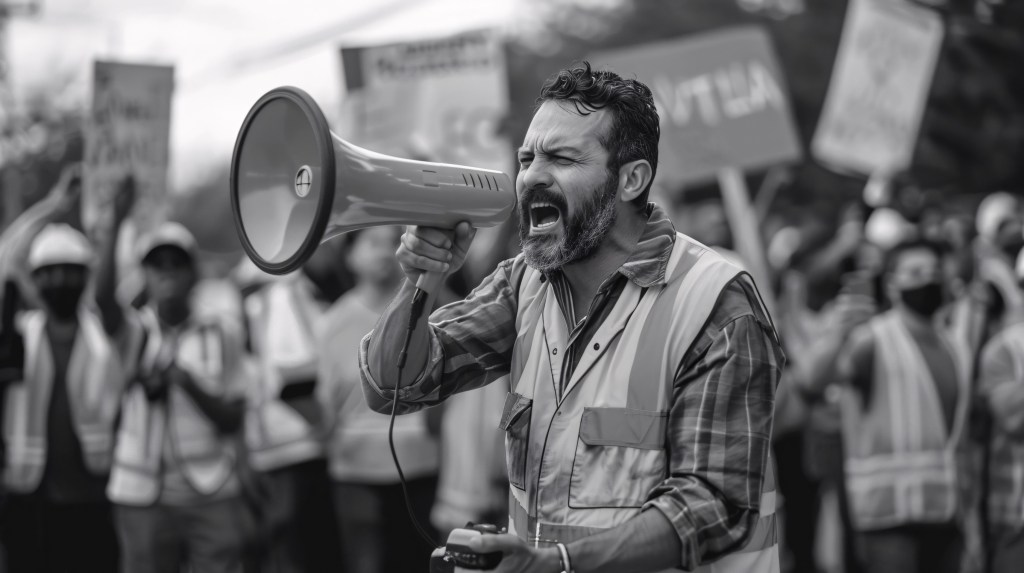
Political polarisation has quietly joined the list of things that determine whether we live long, healthy lives. For decades, public health focused on the familiar culprits: tobacco, polluted air, overcrowded housing, hollowed-out welfare systems and diets built on ultra-processed food. Yet in country after country, the way we line up against one another politically is now shaping who gets vaccinated, who trusts their doctor, who believes a heatwave warning, and who dismisses it as propaganda. When politics hardens into identity and mistrust, it stops being background noise and starts behaving like a risk factor in its own right.
The idea that a political and social divide could affect your risk of infection, your likelihood of being vaccinated, or your trust in screening programmes once sounded like a dystopian thought experiment. Not anymore. From the United States to Europe and beyond, health behaviours are mapping themselves onto partisan identities with unnerving precision. People are not just disagreeing about policies. They are inhabiting different realities about what counts as a threat, whose expertise to trust, and which illnesses are even real.
A growing body of research is spelling this out. A 2024 study across 27 European countries found that higher levels of political polarisation were associated with lower COVID-19 vaccine uptake and slower booster coverage, even after adjusting for age, education and income. Other work shows that in several democracies, vaccination status itself has become a kind of identity badge: “vaccinated” and “unvaccinated” blocs now correlate with longstanding ideological divides that pre-date the pandemic. More recent analyses suggest that trust in government and trust in social media are pulling people in opposite directions, with high social-media use and low institutional trust linked to lower willingness to vaccinate.
By late 2025, the argument has become blunt. A BMJ paper describes political polarisation as an overlooked determinant of health, warning that when politicians are more trusted than scientific institutions on medical matters, the foundations of evidence-based health policy are at risk.
The consequences are increasingly visible at the level of leadership. In the United States, for example, the appointment of vaccine-sceptical figures to senior public health roles has become a live controversy, with critics warning that such moves could further erode public confidence in immunisation programmes and undermine outbreak responses. Similar stories echo elsewhere, in subtler forms: ministers casting doubt on WHO guidance, opposition parties framing infection-control measures as an assault on freedom, fact-checks and evidence reduced to partisan talking points.
None of this emerged from nowhere. Long before the COVID-19 pandemic, trust in government and trust in experts were fraying in many high-income countries, under pressure from austerity, corruption scandals, rising inequality and the rapid spread of disinformation online. Social media platforms gave fringe narratives the same visual weight as peer-reviewed evidence. Prolonged underfunding left public health bodies poorly equipped for modern communications battles. When a novel virus arrived, it landed in systems that were administratively centralised but socially fragmented.
The pandemic then did something else: it turned public health measures into everyday symbols of political belonging. Masks, lockdowns, vaccine passes, even lateral flow tests became signals of which side you were on. Studies now show that attitudes towards COVID-19 vaccines are strongly tied to broader ideological orientations, with left-leaning individuals and those who trust healthcare institutions more likely to vaccinate, while those who distrust both government and mainstream medicine are more hesitant. That pattern has begun to bleed into other debates, from childhood immunisations to climate-related health policies.
For health systems, this is more than a communications problem. It is a design problem. Most modern public health strategies rest on a set of assumptions: that there is a shared baseline of facts; that people will broadly accept neutral expertise when presented clearly; and that institutions like ministries, regulators and universities are seen as legitimate, even if politicians are not. Political polarisation shreds those assumptions.
In a polarised environment, the same message is not heard the same way. A briefing by a chief medical officer will be embraced by one camp and dismissed by another, regardless of content. The more visible the person, the more likely they are to be perceived as “of a side”. The same vaccination campaign may be interpreted as a collective good in one community and as a coercive state intrusion in another. Conspiracy theories fill the gap where trust should be. And once mistrust becomes an identity, it is extremely hard to reverse.
The risks extend beyond vaccines. Consider climate and health. As heatwaves, wildfires and vector-borne diseases intensify, governments will need to introduce adaptation measures, from cooling centres to urban redesign, and mitigation policies such as clean-air zones and dietary shifts. In a depoliticised world, these are technocratic debates about cost-effectiveness and feasibility. In a polarised one, they mutate into battles over “war on motorists”, “nanny states” and “globalist agendas”, with real health consequences for communities caught in the crossfire.
Or take the basics: screening programmes for cancers, cardiovascular risk and infectious diseases. In societies where trust is broadly intact, the main questions are accessibility and capacity. In polarised societies, participation can start to track political lines. If screening invitations, digital health records or new data-linkage projects are framed as tools of surveillance or control, uptake will drop among precisely those groups who already suffer the worst health outcomes.
The instinctive response is to reach for better messaging. Hire more communications specialists, get slicker on social media, seed more content. There is nothing wrong with better communication, but we cannot talk our way out of a structural problem. Political polarisation as a health risk is, at heart, a governance problem. It is about how we organise and insulate institutions, how transparently we make decisions, how we fund public health infrastructure, and how honestly we admit uncertainties. It is also about the conditions that make polarisation politically profitable in the first place: stagnant wages, insecure work, regional inequality, communities feeling ignored or humiliated.
Health policy cannot fix democracy. But it can stop making things worse.
First, public health institutions need sharper, enforced guardrails between evidence and partisan manoeuvring. That does not mean pretending science is apolitical. It never has been. But it does mean protecting surveillance data, clinical guideline development and emergency risk communication from short-term political messaging. Mechanisms like cross-party agreements on pandemic playbooks, independent advisory bodies with statutory transparency requirements, and clear lines for when ministers can and cannot override scientific advice are not luxuries. They are resilience tools.
Second, we need to invest as seriously in public trust as we do in hospitals and digital infrastructure. That includes long-term funding for local public health teams who actually know their communities; partnerships with civil society, faith groups and employers who can act as trusted messengers; and participatory processes that give people real input into health decisions that affect them.
Third, health leaders should stop treating social media as a hostile foreign power that can only be fought or ignored. It is the information ecosystem in which most people now live. Regulators have a role in curbing egregious disinformation and algorithmic amplification of harmful content. But public health has to do the slower work of building a presence that is human, responsive and accountable, rather than relying on occasional campaigns that feel corporate and distant.
Finally, and uncomfortably, health professionals and researchers must resist the temptation to become partisan warriors, even when provoked. Calling out misinformation and defending evidence are essential. So is avoiding performative contempt for those who are sceptical or afraid. Every sarcastic tweet about “stupid antivaxxers” may feel cathartic, but collectively, they feed the narrative that public health is a club for the enlightened, not a service for everyone.
If political polarisation continues on its current trajectory, the cost will not be borne evenly. It will fall, as usual, on people already living with poorer housing, lower incomes, more precarious jobs and higher baseline risks. They will be the ones who skip vaccines, miss screenings, distrust air-quality alerts, or disengage from heatwave warnings because the institutions issuing them feel alien or hostile.
We are used to thinking of politics as the arena in which health policy gets decided. Increasingly, politics itself is becoming a health exposure. If we treat polarisation as an unfortunate backdrop rather than a modifiable determinant, we will design health systems that look rational on paper and fail in practice. If we acknowledge it as a structural risk, we can begin the slower, more uncomfortable work of rebuilding trust, insulating evidence from short-term spin, and designing policies that can survive not only the next virus, but the next election.
In the end, it is not just our institutions that are on the line. It is our ability to agree, at the most basic level, on what it means to keep one another alive.



Leave a comment